Showing posts with label enforcement. Show all posts

Wednesday, 26 February 2020

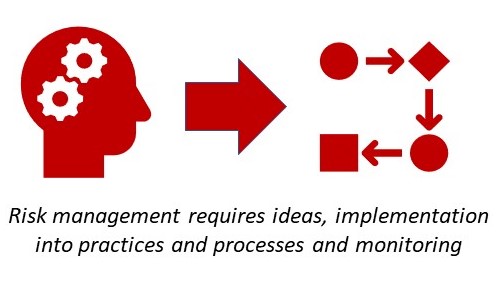
Good risk management is not just about good ideas


One might say that this is stating the obvious and that it is understood that implementation also matters.  A recent FCA enforcement case against Moneybarn would suggest that it is not so obvious after all.
Moneybarn is a lender that provides motor finance for used vehicles to ‘non-standard’ customers.[1] The case against them related to the regulatory expectations for treatment of and communication to customers that fall into financial difficulties, i.e. the exercise and communication of appropriate forbearance by the lender.  Here, we seek to tease out the implications of this case for the risk management activities of FCA regulated business.

1.  Appropriate policy design

As one would expect, policies need to cover the appropriate ground.  This can include articulating the appropriate range of options (in this case, for customers forbearance and resolution), the considerations that would be taken into account and the governance that would apply to different options. 

It is worth noting that in this enforcement case, it appears that the FCA had no obvious concerns about the relevant policies and procedures reviewed.  

2.  Implementation

The challenge is how these policies and procedures are translated in the business, e.g. whether the call scripts are consistent with the policies.  In some case, this means that calls would be far from “linear”.  Customer service agents will have to consider a range of options and guide the customer.  This would have implications for training and tools available for customer service agents. 

The FCA notes that “from the review of the sample the use of any other forbearance options”, other than clearing their arrears over a short period of time, “despite the fact that policies and procedures referred to other available options”.   

3.  Monitoring and assurance

There is usually a combination of first line monitoring and oversight by 2nd and 3rd line functions.  To some extent, who provides assurance becomes less important than whether assurance is provided.

It is important to recognise that assurance should be provided about the processes and about the outcomes.  Where the nature of the issue involves considering customers’ individual circumstances in response to financial difficulties, then it is important to evidence that the range of options set out in the policy have been delivered.   This is more challenging to monitor than following a process. 

It is interesting that in this enforcement note there are no references to assurance or to the role of 2nd and 3rd line functions.

4.  Regulatory relationship management

The FCA initial engagement starts with a seemingly low-profile review of a “limited number” of files and call records leading to a visit in July 2016 to assess forbearance and termination practices.  There were then several interactions with the FCA in September 2016 and January 2017, leading to a formal request for imposition of a requirement in June 2017 and eventually enforcement action.  One must wonder if a more proactive engagement with the FCA would have prevented the escalation to enforcement.

It is usually noted that proactive engagement with the FCA and the issues raised would have been expensive.  Hindsight may be a powerful tool but it is not clear that the cost of the proactive engagement would have been unlikely to exceed the enforcement costs, which ended up being very substantial – the fine of £2.7m, the impact on senior management’s time, and the £30.3m of compensation paid to customers potentially affected by these failings. 

This post is part of the materials discussed in episode 3 of RegNut Podcast.   If you found this post of interest, subscribe to RegNut.  You can also subcribe to the blog and receive further posts by email. See the box on the right-hand side of the blog's screen or click here.


[1] Non-standard customers are those that cannot access finance from mainstream lenders because they have a poor or no credit history or past problems with credit due to unemployment, ill health or other adverse events.

Monday, 25 June 2018

An FCA Enforcement Case Or an Example of Board Maturity?


The FCA issued an enforcement action recently against the CEO of Barclays –– as a result of the CEO’s attempt to identify a whistle-blower.  (Click here for the FCA enforcement notice and here for a short summary of the facts of the case.) There have been impassioned comments about the appropriateness of the FCA’s response, i.e. a fine imposed on the CEO. However, I would like to focus on something else.  

One of the most revealing aspects of FCA enforcement cases is how the issue comes to the FCA’s attention. Typically, FCA supervision or thematic work would identify serious shortcomings in a firm that lead to enforcement action. This one was rather interesting because there was none of that. 

There was an internal investigation of the anonymous letters by Group Compliance which was formally closed on 9 January 2017. The FCA explained that “early in 2017”, the Board became aware of the CEO’s attempt to identify the whistle-blower and that after conducting its own investigation, the Board decided to refer the CEO to the FCA. Can you imagine this ten or twenty years ago? Unlikely, I would say.

There are a number of interpretations one could advance. However, I am inclined to see this as evidence of the significant progress made in corporate governance in recent years and of the maturity boards can achieve in the appropriate environment. I can guess that it may not have been easy for Barclays’ board to refer the CEO to the regulator, but who said that being a board director would be easy?


If you found this post of interest, you may want to subscribe and receive further posts by email. See the box on the right-hand side of the screen or click here

Wednesday, 4 April 2018

Conflicts of Interest: Connecting Enforcement and Supervision


The FCA announced enforcement action against a commercial broker and a fine of £4 million in late 2017 as a result of failures associated with the broker’s management of conflicts of interest. The details of the case are here.

Conflicts of interest can be anywhere, and firms are well aware of that. However, there is a qualitative difference between the conflict of interest that an individual might have with, say, a supplier, and what the FCA identifies as an ‘inherent conflict of interest’ in the business model or ownership structure. This is the risk that commercial intermediaries must manage.[1] It is not static, and it changes as intermediaries take up other activities where they act as an agent of the insurer.

The FCA has also undertaken a thematic review of commercial insurance intermediaries focusing on this issue. (It published the results in 2014 here.) The FCA evidence included a survey of small and medium enterprises (SMEs).[2] This suggests that many SME customers do not fully understand the intermediary’s role and how it may have changed in recent years. For example, four of five SME customers expect an intermediary to get quotes from two insurers, which is not consistent with how intermediaries operate, in particular for micro SME customers (fewer than nine employees).

There are wider messages from this enforcement action for the practical management of inherent conflicts of interest. To begin with, there should be a regular process to identify conflicts of interest.  This might be challenging but following the sources of revenue would enable a robust identification of conflicts and of the impact of changes in the business model.

While a policy on conflict of interest is a regulatory requirement, it needs to be comprehensive enough to enable staff in the business to actually manage conflicts of interest. This would require specific guidance articulating how to deal with customers, including what information to collect, what checks to undertake, and the production of meaningful management information.

Business arrangements such as ‘preferred facilities’ are not ruled out but must be managed and monitored carefully, taking into account links to brokers’ remuneration, how the firm presents itself to SMEs, the existence of ‘Chinese walls’ and customers’ (probably limited) understanding of the intermediary’s role.

Any quality reviews by the first line should be designed with a view to oversee how inherent conflicts of interest have been identified, managed and mitigated. The process should be risk based, i.e. always applying the same degree of checks to all brokers is unlikely to be appropriate.

Last but not least, as ever, culture is a factor. If statements from senior management do not recognise and support the need to manage inherent conflicts of interests, don’t expect much of the above to be in place.

The FCA will usually say something about how the case was discovered, by either supervisory activity or internal review. I was puzzled that the FCA was rather vague on this occasion. On reflection, I suspect (but cannot be certain) that there may be a dependency with the FCA’s thematic review on conflicts of interest mentioned earlier. If that’s the case, it is useful for firms to understand the potential consequences of being unprepared for a thematic review when invited to participate.


[1] This risk is not exclusive to commercial intermediaries. It exists in other parts of financial services and has also been covered in other FCA enforcement activities.
[2] Businesses with fewer than 250 employees.

Monday, 21 December 2015

Out Outsourcing?


Well, not really.  But I am sure you have heard regulatory concerns about the lack of appropriate controls around outsourcing in financial services.  It is therefore not entirely surprising that the UK’s Prudential Regulation Authority (PRA) has recently fined a bank £1.2 million for failures in the controls associated with outsourcing (here).  There are, however, a number of interesting points about this enforcement case that have broader lessons about the supervisory expectations associated with the use of outsourcing in financial services.

1.  The regulatory expectations with respect to outsourcing within a group or to a third party outside the group are the same.  I have heard this before but I was still expecting to see a recognition that there may be a difference.  I could not really find an obvious distinction in the enforcement notice.  This is particularly relevant in financial services where brands are typically a collection of companies, sometimes with a core staff serving a number of companies, in particular with respect to finance (and, in insurance, actuarial).  This also has implications for risk functions which will also need to articulate how their oversight relates to the various companies.

2.  The outsourcing arrangements are documented appropriately in a timely manner. While putting contracts in place within a group is probably understood to be a regulatory expectation, there are two important dimensions that this case highlights.  The first of these is the importance of putting contracts in place at the outset and undertaking due diligence; bear in mind point 1 above.  This also includes signing the contracts!  Secondly, in the case of internal outsourcing involving a control function, it is important that the roles and responsibilities of the various parties are clearly defined.  This can include determining the different roles of people and teams probably sitting near each other.

3.  The legal form of the outsourcing provider does not matter.  A JV form that effectively provides an outsourcing activity should also be treated as outsourcing. 

4.  The consequences of a lack or breakdown of controls matter a great deal.  If the finance function is outsourced within the group, then a breakdown can have severe financial implications (e.g. unauthorised payments) and can include misreporting of the capital and liquidity position to the PRA.

Last but not least, the response when the issue is discovered remains crucial.  In this case, it involved terminating certain outsourcing contracts and putting in place new ones, transferring finance teams to the relevant company and ensuring operational separation of the Bank from the rest of the group.  In addition, the bank commissioned a firm of accountants to review the matter, undertook its own review of all outsourcing contracts and was subject to a skilled persons review by the PRA.  As in other cases, the fine may not have been the largest cost to the bank.

If you found this post useful, you may want to subscribe and receive further posts by email – see box on the right hand side of the screen or click here.  My target is to post on a regular basis but I will not be flooding your inbox. 

This post is part of a series of posts on the practical lessons for risk management from enforcement cases.  The posts are all brought together in the page Enforcement Cases of the blog.

Monday, 16 November 2015

Risk Management Lessons From the Co-op Bank's Demise


One of the fallouts from the financial crisis in the UK was the demise of the Co-op Bank as part of the Co-operative movement.  The UK regulators (the PRA and the FCA) investigated the causes of the bank’s demise and issued simultaneous enforcement notices earlier this year (here and here).  The key failures identified by the regulators are summarised in Box 1. 
One of the key points for the press was the regulators decision to waive any financial penalties, reflecting the financial conditions of the Coop Bank.  However, from a risk management perspective, the enforcement notice represents an interesting catalogue of lessons in risk management for both banks and insurers: 

1.  Risks and business strategy go hand in hand.  It is difficult to manage risks effectively in the absence of a clear and comprehensive strategy for key lines of business. 

2.  A ‘cautious’ risk appetite statement is not enough.  Business decisions still must be evidenced as ‘cautious’ in practice even if this happens on a qualitative basis. 

3. The remit of the risk function includes valuations and accounting decisions.  This is particularly relevant in terms of the challenge and governance to (changes to) assumptions associated with discretionary features about valuation e.g. about the timing of redemption of capital instruments.   

4.  Policies are more than documents.   Compliance with policies must be evidenced.  A complex and changing business reality cannot be captured through prescriptive policies.  Certain discretions must be factored into decision making processes.  The risk oversight should cover how those discretions are applied in practice.   

5.   An open and cooperative relationship with the regulators is not just about issues.  It includes updating the supervisor regarding concerns about the position of senior individuals leading to intended changes.

6.  An effective risk culture is an outcome of business decisions about risk.  This was one of the concerns of the regulators.  The regulator’s articulation of an effective risk culture is interesting: ‘A culture in which accepted orthodoxies are challenged, action is taken to address risks on a timely basis and risk and control functions carry real weight is likely to support prudent management.’  In a nutshell, a risk culture is not end in itself but the means to support prudent management.

The enforcement notice mentions other issues regarding the shortcomings of the risk management oversight and internal audit. 

Finally, it is worth noting that the period of time formally considered by the regulators stretches from July 2009 – weeks before the Co-op Bank’s merger with the Britannia Building Society – to December 2013 – when it ceases to be a wholly owned subsidiary of the Co-op Group.   I don’t think the shortcomings just materialised in July 2009. 

This suggests that the perceived connection between responses to the financial crisis and strengthening risk management may not have been as widespread as it might have seemed.  The shortcomings are clearly serious and while they may not be critical when taken individually or addressed within a short period of time, it is the cumulative impact that had the effect of bringing the Co-op bank's demise.    

If you found this post useful, you may want to subscribe and receive further posts by email – see box on the right hand side of the screen or click here.  My target is to post on a regular basis (no more than weekly) and I will not be flooding your inbox. 

This post is part of a series of posts on the practical lessons for risk management from enforcement cases.  The posts are all brought together in the page Enforcement Cases of Crescendo ERM blog.

Monday, 6 July 2015

Is the Governance Map Also the Territory?

One of the financial crisis’s lessons for regulators has been discovering the ‘accountability firewall’ of collective responsibility which prevents actions against individuals even if they are approved for specific roles.  This was one of the lessons from the UK Parliamentary Commission on Banking Standards from 2013.

UK regulators have been tasked with the challenge of breaking down that ‘firewall’ for both banks and insurance.  The UK has had a regime of approved persons for some time.  The PRA and the FCA have been consulting on proposals aimed at strengthening the accountability of senior management.  For insurers, this is referred to as the Senior Insurance Managers Regime (SIMR).

The proposals may well increase the scope of senior managers, and will strengthen conduct requirements that apply to them.  It seems to me that the most innovative (and, dare I say, revolutionary) aspect of the proposals is the requirement that firms produce a ‘governance map’.   As with all good ideas, it is simple.  The regulator identifies a set of responsibilities and then asks firms to map them to senior managers who are subject to regulatory approvals and sanctions.  

The list of responsibilities is long.  For example, the list for insurers is as follows:
1.       ensuring that the firm has complied with the obligation to satisfy itself that persons performing a key function are fit and proper;
2.       leading the development of the firm’s culture and standards;
3.       embedding the firm’s culture and standards in its day-to-day management;
4.       production and integrity of the firm’s financial information and regulatory reporting;
5.       allocation and maintenance of the firm’s capital and liquidity;
6.       development and maintenance of the firm’s business model;
7.       performance of the firm’s Own Risk and Solvency Assessment (ORSA);
8.       induction, training and professional development for all the firm’s key function holders;
9.       maintenance of the independence, integrity and effectiveness of the whistleblowing procedures, and the protection of staff raising concerns;
10.   oversight of the firm’s remuneration policies and practices.

For banks, there is no direct equivalent to 7 even if there is an ICAAP.   However, the list includes the following additional responsibilities:
1.       funding is also mentioned in 5. above as well as an additional responsibility in respect of the bank’s treasury management functions;
2.       developing a firm’s recovery plan and resolution pack and overseeing the internal processes regarding their governance;  
3.       managing the firm’s internal stress-tests and ensuring the accuracy and timelines of information provided to the PRA and other regulatory bodies for the purpose of stress testing; 
4.       safeguarding the independence of and overseeing the performance of the compliance function, internal audit and risk function respectively; these are three different responsibilities.

There are some interesting differences between banking and insurance.

The overall message is rather simple: there is an individual presumption of responsibility in the event of a breach.  In those cases, the relevant individual will need to demonstrate that he took reasonable steps to prevent the breach in the relevant area. 

Firms’ senior managers will spend time discussing the mapping of responsibilities.  This may well be the easy part.  Undoubtedly, the challenge for senior managers will not be the map, but the territory, i.e. how to manage the relevant responsibility.  For some responsibilities there will processes, teams and awareness within the company to ensure that something happens; think of item 7 above, the ORSA.  In other cases, the challenge will be determining which business function will assume the relevant responsibility and what approaches, processes and resources will be needed as evidence that reasonable steps were taken.  What should be done to prove that ‘firm’s culture and standards’ are developed and embedded?  

If you found this post useful, you may want to subscribe and receive further posts by email – see box on the right hand side of the screen or click here.  My target is to post on a weekly basis so I will not be flooding your inbox. 

Friday, 27 February 2015

The Three Lines of Defence: An Enforcement Perspective


Much has been written about the three lines of defence model, including whether there are really three lines of defence (or any other number) and whether the concept is dead.  I personally regard the three lines of defence as a mechanism to clarify roles and responsibilities and underpin the risk management activities of different functions in financial services.

This week there was good evidence that the concept is alive and well.  The FCA issued a penalty to Aviva Investors for failure to manage the conflicts of interests between itself and clients, and between different clients (full paper here). 

From a risk management perspective, there were a couple of interesting lessons:   

1.  The increased size of compensation paid as part of the enforcement case relative to the size of the regulatory fine; in this case the fine was £17.6m and the compensation to eight funds was £132m. 

2.  The FCA has drawn an explicit parallel between failures of the three lines of defence model and Principle 3 which requires that an authorised firm “take reasonable care to organise and control its affairs responsibly and effectively, with adequate risk management systems.”  

The articulation of the case looks at the performance of each line of defence and articulates the observed failures which provides a useful checklist.  

1. Weaknesses in the first line of defence 
  • unclear split of responsibilities between first and second line of defence 
  • failure to implement appropriate controls  
  • lack of system to capture the relevant information 
  • weaknesses in management information produced 
  • culture focused on performance together with performance management that often overlooked the importance of risk and controls  
2.  Weaknesses in the second line of defence  
  • inadequate compliance monitoring 
  • inadequate compliance resource and capability 
3.  Weaknesses in the third line of defence  
  • unclear process to accept the risk associated with control weaknesses 
  • dependency on strategic change projects without adequate consideration of whether they address the findings and support the closure 
  • lack of testing of the closure of audit issues
Intuitively this characterisation of systems and controls around the three lines of defence is not new; in my view, rather, it is the explicit recognition in an enforcement case that is new.

You can subscribe to future posts here.

This post is part of a series of posts on the practical lessons for risk management from enforcement cases.  The posts are all brought together in the page FCA enforcement.

Sunday, 1 February 2015

Is It FCA Supervision or Enforcement?


One of the observations in my latest post about enforcement (here) was that fines can become a relatively small component of the cost of regulatory enforcement.  This observation was made in a context where, in addition to the fine, the firm had agreed to a number of specific measures which included replacing its executive management team and a comprehensive review of its governance structure. 

This week I came across an even better example of the blurring line between formal enforcement and where a firm agrees with the supervisor to a set of measures.  The Times reports that the London office of Deutsche Bank has been put on ‘enhanced supervision’ (here). 

Enhanced supervision is a new power acquired by the FCA, the use of which is articulated in a paper from June 2014 (here).  It explains that the application of enhanced supervision is not enforcement, although that may follow.  Enhanced supervision requires the firm’s Board to formally commit to remediation measures.  The paper sets out a comprehensive list of indicators of the failures that would lead to enhanced supervision:  
  • “the observation of numerous or specially significant conduct failings or repeated failings that when examined individually might not be considered serious  
  • “occurrence of failings in several business areas, as this is an indicator of wider cultural issues within the firm 
  • “a poorly functioning Board, for example failing to challenge executives or take a lead in considering conduct  
  • “evidence of control areas such as Risk, Compliance and Internal Audit being poorly managed, under-resourced or unable to make their voices heard at Board level 
  • “evidence of weak risk management (we may consider the PRA’s findings in relation to prudential risk management), or 
  • “evidence of other weaknesses in the way in which the Board and senior management influence key cultural factors, for example ‘tone from the top’, pay and incentives and their adherence to the organisation’s values.” 

There has been no formal statement from the FCA about this case. 

Perhaps the main point arising from this development is the further recognition that formal enforcement may not necessarily be the most effective tool from the point of view of meeting supervisory objectives and that fines may not be the most effective deterrent.  

You can subscribe to future posts here.

This post has been added to the page FCA enforcement in this blog which links all the enforcement cases reviewed.

Friday, 14 November 2014

Financial Conduct Authority Enforcement: The Sum and the Parts


In previous posts I have covered the lessons for risk management from a number of enforcement cases from the UK Financial Conduct Authority (FCA) (e.g. here and here). 

An alternative approach is to capture summary data about all fines and assess their evolution over time.  This is what NERA – National Economics Research Associates – have been doing for a number of years.  The latest paper of this series is available here.  (Full disclosure: I worked at NERA several years ago.)

The latest report from NERA evidences the overall increase in FCA (and FSA) enforcement in the last two years.  Total fines to firms have increased from £59 million in 2011-12 to about £420 million in each of the last two full financial years.  The typical fine is also getting larger with the median fine increase from £1.4 million in 2011-12 to £5.6 million in 2013-14.  

There were also some other interesting observations:
  • The overall number of cases against firms does not necessarily predict the total fines.
  • While five out of the 10 top fines against firms relate to LIBOR market manipulation, the others cover “classical” issues such as client assets, unsuitable investments and mis-selling.
  • The total of fines against individuals (as opposed to firms) has diminished from £19.9 million in 2011-12 to £3.9 million in 2013-14.  A similar trend is observed for number of cases pursued against individuals.
There are two points that I would like to consider.

1.    The impact of the FCA revised penalty framework

The increase in FCA fines against firms may be influenced by the reliance on the revised penalty framework.  It is summarised in five steps:
  • Step 1: removal of any financial benefit derived directly from the breach  
  • Step 2: the seriousness of the breach 
  • Step 3: mitigating and aggravating factors
  • Step 4: an increase to the result from the above steps to reflect an adjustment for deterrence 
  • Step 5: settlement discount
This applies to conduct that took place since 6 March 2010.  Given the lead times for enforcement cases, this framework is probably starting to bite in earnest now and fines could stay at the current higher level and even increase further.  It will also be interesting to read in the enforcement notices how economic considerations shape the regulator’s view about the size of any financial benefit derived by the company from the breach.

2.    The decline in enforcement cases against individuals

NERA also wonders if this decline is consistent with the regulatory ambition of using enforcement to provide a “credible deterrent”.  

One possible reason for the decline in enforcement against individuals is the targeted diversion of resources to other investigations such as LIBOR and currency manipulation.  In this case, the decline would be reversed in the not-so-distant future. 

An alternative is to consider whether the change reflects the view that enforcement against firms provides a more efficient “credible deterrent”.  If this were the case, then the decline of enforcement action against individuals would not be reversed.  I have not come across evidence to support this claim but here are two arguments to consider:  
  • A stronger deterrent effect is provided by the overall size of the fines, which tend to be larger for firms, than personal accountability.  
  • Enforcement cases related to individuals tend to reveal individuals’ determination to breach the rules rather than weaknesses in risk management.  There may be a more limited scope for improvement in risk management while providing an effective service to customers.

I would be interested in your thoughts about the likely impact of the FCA revised penalty framework and the decline in enforcement cases against individuals.


You can subscribe to future posts here.